
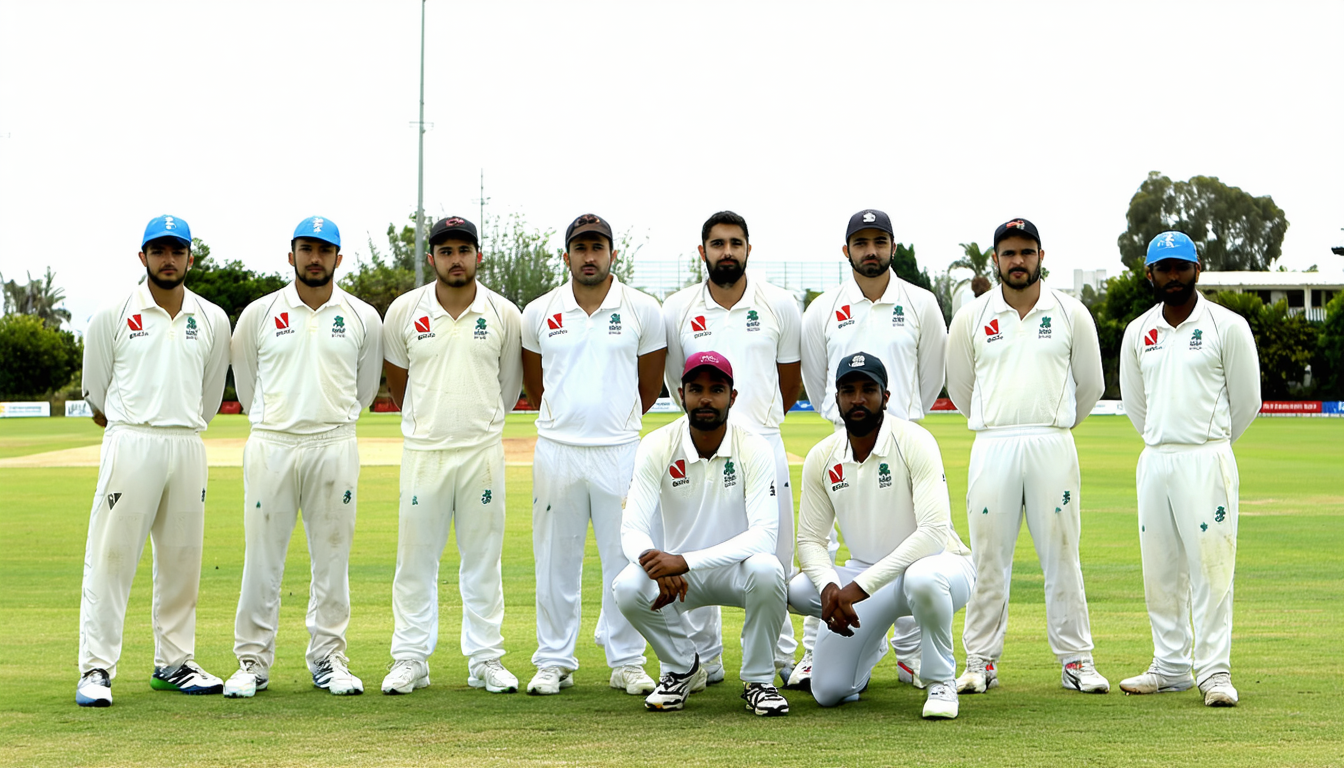

Cricket in the United Arab Emirates wasn’t always headline news. The shimmering skyscrapers and the markets of Dubai and Abu Dhabi, buzzing with global energy, weren’t exactly known for cricket fever. But times change. Now, walk past any park in Sharjah on a Friday, and you’ll see dozens of homegrown and expat cricketers swinging bats under the sun. The United Arab Emirates national cricket team has emerged slowly—but with a determination that’s easy to underrate if you’re not paying attention. Let’s take a closer look at the squad, the history, and a few faces making the Emirates’ dream of cricket glory quite a bit less distant than it once appeared.
History and Evolution of UAE Cricket
Humble Beginnings and ICC Association
Cricket itself arrived in the Emirates way back in the 19th century, piggybacking on traders and oil workers from the subcontinent and England. For decades, though, it stayed a casual weekend pursuit for expats. The big change started in 1989, when UAE achieved associate member status with the International Cricket Council (ICC). This opened up opportunities—albeit still modest—to test talent at international tournaments.
Key Milestones
- 1996: The UAE national team gets its first taste of the World Cup, a David-vs-Goliath scenario by any measure. Unsurprisingly, the team struggled, but just qualifying was considered a landmark.
- 2004: Victory at the ACC Trophy finally gave UAE something tangible for their trophy cabinet—a moment of belief for aspiring Emirati cricketers.
- 2015 ICC Cricket World Cup: A return to the big stage, powered by a more mature set-up, though wins still proved elusive.
The country’s unique demographic—a blend of South Asian expats and local Emiratis—has shaped both challenges and prospects. Some critics grumble—never fully content—about the national team’s reliance on expat talent, yet others see it as a melting pot advantage.
The Structure Behind the Squad
Domestic Cricket and Infrastructure
The domestic circuit in the UAE is a curious mix. Franchise T20s and high-profile events (who doesn’t remember the IPL detour to UAE?) have given the country world-class stadiums, like the Dubai International Cricket Stadium and Sharjah Cricket Stadium. But behind the scenes, grassroots development can feel a bit fragmented. The Emirates Cricket Board (ECB) continues to juggle the demands of nurturing local players without alienating the huge base of overseas-origin athletes.
There are regular club leagues—dozens of them, really—but critics say the gap between amateur cricket and the international stage is still significant. It’s improving, but almost unevenly, and definitely slower than some fans would wish. That said, hosting major ICC tournaments and international tours has undeniably raised the bar.
“The UAE has worked hard to establish a cricketing infrastructure that’s the envy of many associate nations,” says Zahoor Khan, a UAE fast bowler who’s seen the shift firsthand. “But there’s still a lot to do. Sometimes, you just feel that hunger to go from decent to world-class.”
Coaching and Administration
A rotating cast of coaches—some local, some renowned internationals (see Dougie Brown and Robin Singh)—has brought a blend of styles and strategies. Stability and identity can be tricky when the player pool is so diverse. Administratively, the rise of women’s cricket and expanded junior programs prove that the ECB is far from content with standing still.
UAE’s Key Players: Old Guards and Rising Stars
The team itself is a fascinating patchwork—veteran stalwarts, South Asian-origin power hitters, promising Emirati talents, and a handful of canny bowlers, all schooled in different conditions.
Leading Batsmen
- Rohan Mustafa: Something of a cult hero, Mustafa’s all-round contributions have been pivotal. Whether opening the innings or bowling crucial overs, his stats have often kept the UAE’s head above water. Not perfect, but never short on heart.
- Chirag Suri: Elegant, aggressive, and with a handy knack for anchoring innings, Suri grew up batting on UAE wickets and is one of the few local-born talents to break through.
- Muhammad Usman: His quiet dependability and unbeaten knocks are the stuff of old-school cricket dramas. No big ego, just results when it counts.
Bowling Talent
- Ahmed Raza: A left-arm spinner who’s been at the helm as captain. He’s proved that guile counts for as much as raw pace, particularly in slow UAE conditions.
- Zahoor Khan: A relative late bloomer, Zahoor’s pace and commitment shine bright in T20s and the occasional ODI upset.
- Junaid Siddique: Big, burly, and unpredictable on his best days, Junaid is the kind of bowler who can rip through top-orders or leak runs—a wild card, honestly, but entertaining.
Emerging Prospects
On the fringe, there’s chatter about young Emirati fast bowlers and a few batsmen pushing through the U-19s. While none have become household names yet, occasional flashes raise hopes that a generation raised in UAE, not just imported, will soon be central to the squad.
UAE’s Style of Play and Strategic Outlook
The team leans toward the disciplined, perhaps sometimes a bit too much “by-the-book.” Part of that is a side effect of playing so much cricket on slow, low wickets—a far cry from English green tops or Australian bounce.
On the field, the UAE often relies on all-rounders and spinners, keeping things tight and hoping for mistakes, rather than blowing away opposition with brute force. That conservative style has worked in regional tournaments but remains a struggle against top-tier international sides. The math is simple: to push further, the UAE needs more firepower—especially with the bat.
Strengths and Weaknesses
- Strengths: Team unity, experience in desert conditions, adaptable bowling unit.
- Weaknesses: Lack of pace options, over-reliance on expat stars, occasional wobbly top order.
- Opportunities: Growing youth pipelines, women’s and grassroots development, access to international-level facilities.
- Threats: Competition for talent, especially with franchise leagues tempting key players; and, if we’re honest, a bit of administrative inconsistency sometimes.
Real-World Context: UAE Cricket’s Place in the Sport
International cricket is tricky territory for the UAE. On one hand, hosting IPL matches and ICC tournaments (most notably during the COVID years, when UAE became cricket’s “bubble” capital) has given them exposure. On the other, real respect at the World Cup stage requires more than being a great host—it needs upsets, local heroes, and sustained investment in youth.
Anecdotally, stories abound of weekend cricketers from Sharjah leagues getting surprise national squad call-ups. The diaspora-heavy fan base means that, in some ways, the UAE team represents more than one country at once. Is that a problem? Debatable. Some fans love the global flair; others quietly wish for more homegrown stars taking center stage.
Conclusion: Ambition Meets Reality
The United Arab Emirates national cricket team embodies a complex, noisy ambition—a side that’s hungry to shake off its “associate” tag and compete with the big boys. Growth is happening, albeit with detours and stutters. Infrastructure, coaching, and administrative support are catching up, and there’s real possibility on the horizon for Emirati-born stars to lead future teams.
But, cricket in the UAE isn’t only about stats or trophies. It’s about a country, a set of cultures, and a sport all trying to find their voice together. A little messy, at times imperfect, but never boring.
FAQs
How did the UAE national cricket team qualify for international tournaments?
UAE often qualifies through regional tournaments like the ACC Trophy and ICC World Cup Qualifiers, leveraging strong performances against other associate nations.
Who are some of the most influential UAE cricket players?
Rohan Mustafa, Ahmed Raza, and Chirag Suri stand out for their consistency and key performances in both batting and bowling.
Is the UAE team mostly made up of expat players?
Yes, much of the squad consists of players born outside the UAE, but there is a growing emphasis on nurturing more Emirati-born cricketers and including youth products.
Which stadiums serve as home grounds for the UAE team?
Key stadiums include the Dubai International Cricket Stadium, Sharjah Cricket Stadium, and Sheikh Zayed Stadium in Abu Dhabi—venues known for hosting both domestic and major international events.
What are the UAE’s main strengths in cricket?
Strong fielding, familiarity with subcontinental conditions, and a well-drilled spin attack typically characterize UAE’s approach, along with team unity and resilience.
Are there opportunities for local players to break into the national squad?
Yes, recent years have shown more support for youth academies and junior cricket, with the administration working to identify and develop homegrown talent for the future.




Leave a comment