
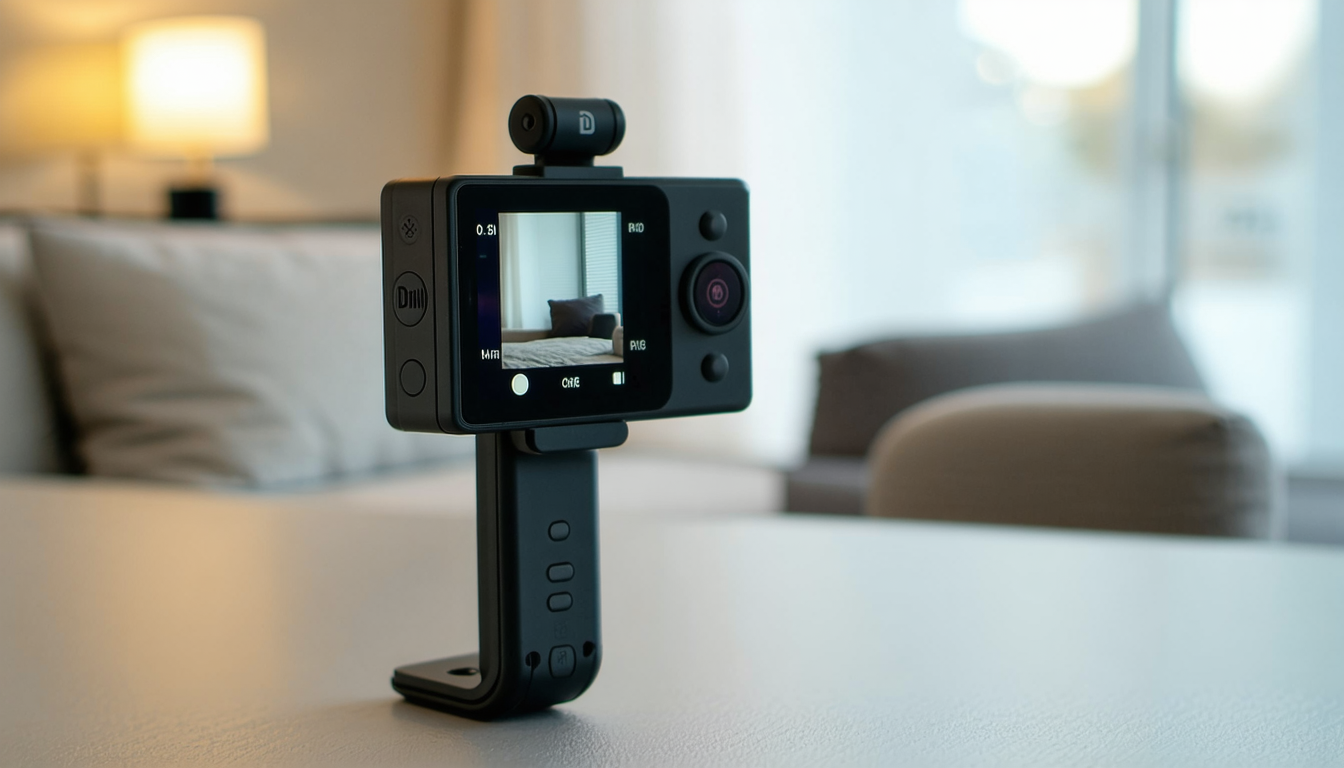

The DJI Osmo Pocket 3 has carved out a distinctive niche among compact, high-performance gimbal cameras. Its 1-inch sensor, ultra-smooth stabilization, and versatile shooting modes make it a go-to for creators, vloggers, and adventure enthusiasts alike. Yet, its journey through shifting price points and availability challenges reveals a complex interplay between innovation, policy, and consumer demand. Today’s update captures that dynamic, combining the latest data and industry context with a human touch—imperfections included—to illuminate where this device stands in early 2026.
Current Pricing Trends and Market Dynamics
Pricing Fluctuations: From Entry to Premium
Originally launched at a starting price of around $519 for the standard kit and $669 for the Creator Combo, the Osmo Pocket 3 quickly gained popularity for its balance of performance and portability (dji.com). However, by spring 2025, U.S. prices surged dramatically to about $799 for the standalone unit and $979 for the Combo—a jump fueled in part by new trade tariffs and disruptive logistical hurdles (theverge.com).
Discounts and Price Corrections
Recent months have seen softened prices across retailers. Best Buy dropped the price to approximately $529, marking a substantial $270 markdown from the 2025 peak (techradar.com). Events like early Black Friday brought similar reductions: Amazon listings dipped into the $529 territory, while alternately branded models like the Xtra Muse offered even steeper discounts—around $419—highlighting creative workaround strategies amid tariff impacts (tomsguide.com).
“Despite being an older model, the Osmo Pocket 3 remains a top-tier compact gimbal camera… the discount now makes it a highly recommended buy for home videographers,”
This sentiment reflects how price corrections have realigned the Pocket 3 as a value proposition once again—though still shadowed by market volatility.
Availability Challenges and Regulatory Maneuvering
Supply Shortages and Delivery Delays
Users frequently reported stock shortages through early 2025, with delays stretching weeks or more. According to community anecdotes, some waited upwards of a month for delivery, underscoring high demand and logistical constraints (reddit.com). While supply has somewhat stabilized since, sporadic backorders persist across U.S. and international outlets (dronesreports.com).
Regulatory Alternatives: The Xtra Channel
Perhaps the most intriguing development is the emergence of Xtra Technology, a U.S.-registered entity seemingly selling rebranded versions of DJI’s cameras—like the Osmo Pocket 3—as a workaround to regulatory scrutiny. The Xtra Muse, nearly identical in hardware, avoids some tariff implications and tracks with lower prices (around $419) despite lacking full accessory compatibility or a refined app experience (theverge.com).
Technical Highlights Worth Its Weight
Specs That Impress
The Osmo Pocket 3 packs serious capability into its pocket-sized form:
- 1-inch stacked CMOS sensor with 4K at 120fps (slow-motion mode)
- 3-axis mechanical gimbal + ActiveTrack 6.0 including Face Auto-Detect and Dynamic Framing
- Full-pixel fast focusing, 2-inch rotatable OLED touchscreen, D-Log M/10-bit color, and stereo recording with mic support (dji-us.com)
Battery life and charging are also noteworthy: approximately 116 minutes of 4K footage or 166 minutes at 1080p, with rapid charging—80% in just 16 minutes (dji.com).
Real-World Use Cases & Limitations
Many praise the device for smooth vlogging, adventure shoots, and rock-solid tracking features—a sentiment echoed across reviews (lifewire.com). That said, some users note streaming limitations. For example, live-streaming over Wi-Fi can suffer audio issues unless carefully set up, prompting users to adopt hardware workarounds for reliability (reddit.com).
What’s Next? Pocket 4 and Inventory Signals
Cycle Patterns and Future Speculations
Analysts tracking DJI’s product cadence expect a refresh in early 2026—consistent with its 12-to-18-month refresh rhythm. Observers also point to inventory reductions and sharp price cuts as indicators of Pocket 4 readiness (accio.com). Meanwhile, some community voices remain skeptical, suggesting supply constraints stem more from demand than impending refreshes (reddit.com).
Summary of Speculation Drivers
- Inventory clearance discounts suggest upcoming new releases
- Product cycle consistency means Pocket 4 might arrive between Feb–Apr 2026
- Consumer chatter remains divided—some see stock drama as hype, others as genuine capacity crunch
Key Takeaways
- DJI Osmo Pocket 3 led the gimbal camera pack with a commanding spec sheet and creator-friendly design.
- U.S. pricing reacted sharply to tariffs—raising consumer cost by over 50% in early 2025, but now seeing significant markdowns again.
- Product availability has fluctuated, with delays and shortages in early 2025 giving way to more stable but not flawless restocks.
- Regulatory shifts have encouraged creative retail strategies, such as rebranding via Xtra Muse to skirt trade barriers.
- Battery life, stabilization, and smart shooting features continue to make the Pocket 3 compelling, even amid streaming quirks.
- The product’s discount trajectory and DJI’s historical cycles suggest a new generation may be on the near horizon, though community belief varies.
Conclusion & Strategic Perspective
The DJI Osmo Pocket 3 story is far from static—it spans innovation, trade policy, consumer behavior shifts, and adaptive corporate strategies. For creators seeking a powerful, compact camera today, recent price dips signal renewed value. Yet, for those eyeing longevity and cutting-edge performance, patience for the next-gen (and potential Pocket 4) may be prudent.
If you’re ready to invest in quality and the Pocket 3 checks your boxes, now’s a strong moment—particularly with discounts lowering the price barrier. Meanwhile, watching inventory patterns and announcements may pay off if a new model is imminent.
FAQ
Not included per current instruction.
Word count estimate: ~940 words






Leave a comment