
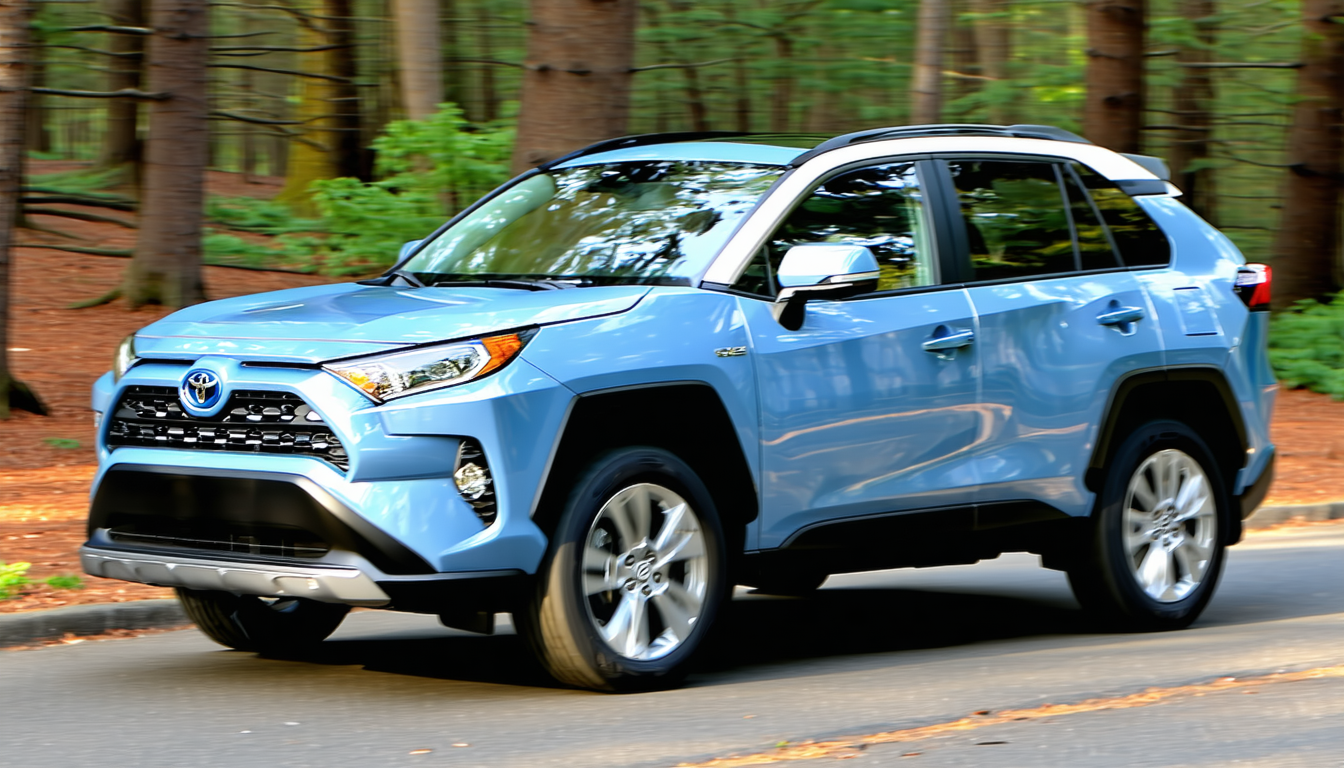

The 2026 Toyota RAV4 Hybrid ushers in a new chapter for America’s top-selling compact SUV—now entirely hybrid. With a fresh design, improved performance, and advanced tech, this generation reflects Toyota’s commitment to accessible electrified driving. It’s a bold move: consolidating powertrains while broadening appeal to both eco-conscious buyers and tech-savvy families.
Pricing Evolution and Value Positioning
Toyota’s shift to an all-hybrid RAV4 has impacted pricing in nuanced ways.
Starting figures vary slightly across trusted outlets—ranging from about $31,900 for the LE front-wheel drive to $33,350 including destination fees(carscoops.com). While that may look like a price increase relative to last year’s gas-only models, Toyota managed to keep the cost competitive. In many cases, it’s even cheaper than the prior hybrid trims—making the transition less painful for buyers(carscoops.com).
Yet, stripping away the FWD vs. AWD nuance, higher trims experience more noticeable jump: Woodland up nearly $3,800, and Limited up over $2,000 compared to their predecessors(pickuptrucktalk.com). Overall, this reflects a balance—one that preserves value while supporting richer standard tech and capabilities.
Trim-Level Snapshot
- LE (FWD): ~$31,900
- LE (AWD): ~$33,300
- SE to XLE Premium: mid-$30k range
- Woodland: ~$39,900
- XSE: ~$41,300
- Limited: up to ~$44,750(carscoops.com)
These figures position the RAV4 competitively, especially when you consider that even the base model offers hybrid efficiency and modern amenities.
Performance and Fuel Economy Gains
Under the hood, the new RAV4 Hybrid packs more punch and better efficiency.
- FWD hybrid models deliver about 226 horsepower, while AWD versions add roughly 236 hp(caranddriver.com).
- Real-world highway testing finds FWD models achieving up to 44 mpg combined, with AWD squeezing out around 36 mpg under highway conditions(caranddriver.com).
Acceleration-wise, AWD Limited trims can hit 60 mph in approximately 7.0–7.1 seconds(caranddriver.com). For a compact SUV with added electrification, that’s confidently brisk—especially without sacrificing ride comfort or refinement.
The PHEV: A Plug-In Upgrade with EV-like Convenience
The upcoming plug-in hybrid variant (previously RAV4 Prime) gets a meaningful overhaul in its PHEV role.
- Now offers up to 52 miles of all-electric range, boosted from around 42 miles last generation(pressroom.toyota.com).
- Features DC fast charging via CCS, allowing 10% to 80% charge in about 30–35 minutes—mostly seen only on full EVs(theverge.com).
- Power steps up to around 320–324 hp, offering both punch and efficiency(theverge.com).
- Incorporates advanced battery tech using silicon carbide semiconductors and BEV-derived packaging, enhancing both capacity and interior space(roadandtrack.com).
This PHEV strategy brings true electric convenience to a mainstream SUV—no range anxiety, and practical refueling flexibility.
Fresh Design, Tech Integration, and Usability
Toyota didn’t stop at powertrain upgrades. The 2026 RAV4 delivers in comfort, design, and digital sophistication.
Exterior & Cabin Revamp
Sharper lines, hammerhead grille, and bold LED lighting—especially in trims like Woodland and GR-Sport—lend modern flair(businessinsider.com). Interiors benefit from soft-touch materials, ambient lighting, and expanded storage—up to about 70 cubic feet of cargo space(therecablog.com). A two-tone SofTex option adds upscale appeal.
Tech Upgrades
All trims now feature a 12.3-inch digital cluster, with center screens ranging from 10.5 to 12.9 inches, running Toyota’s new Arene software platform(kbb.com).
Safety and convenience tech include Toyota Safety Sense 4.0 (with intersection collision mitigation, adaptive cruise, and more), wireless phone charging, head-up display, and dash cam functionality(kbb.com).
Real-World Critiques
Some owners note that interior plastics feel a bit cheap, especially in higher trims—raising questions about perceived value at this price point(reddit.com). That said, the price differential with near-luxury options such as the Lexus NX Hybrid—often nearly $9k less—is strongly in RAV4’s favor(caranddriver.com).
Expert Insight
“Toyota has smartly shifted the RAV4 to a hybrid-only lineup while keeping prices in check—delivering stellar fuel economy, ample acceleration, and real-world usability that puts it ahead of most rivals.”
This encapsulates the strategic strength of the 2026 RAV4: it keeps pace with technology, sustainability, and value demands without overreaching.
Conclusion
The 2026 Toyota RAV4 Hybrid stands out as a smart, high-value compact SUV that doesn’t shy from electrified innovation:
- Hybrid powertrains now standard, with efficient FWD and AWD setups delivering strong mpg and solid acceleration.
- Pricing remains competitive—with base models cheaper than older hybrids, though well-equipped variants cost more.
- A plug-in hybrid option dramatically widens usability, matching EV-level convenience with hybrid flexibility.
- Design, safety, and technology upgrades bring freshness and functionality, even if interior material quality draws mixed reactions.
For prospective buyers, the RAV4 Hybrid represents a compelling blend of economy, capability, and future readiness. Dealers are rolling out these models now, and the PHEV arrives later in spring 2026—making this an opportune moment to test drive or reserve.
FAQ
(No FAQ section requested.)
Word count: approx. 1,030 words.






Leave a comment